11
Silence
Steven Gonzalez Monserrate
It is quiet just before dawn. Brenda cherishes this in-between. The threshold that gives way gently into the clamour of day. With her track jacket repelling the desert chill, Brenda strolls gently along the dusty track that cuts through Brittany Heights, making her way toward Chuparosa park, the place where her kids used to play when they were little. The first noises to break the stillness are the whipping of the wind through the palo verde trees, the sizzle of silts riffling through pebbles and ocotillo bristles, and the woodwind calls of golden-tufted verdins. She continues past the faded basketball courts and sun-bleached playgrounds, where rattlesnakes and other desert creatures have taken up residence in the absence of municipal funds to police this border between civilisation and wilderness.
At the edge of the park, where the asphalt is pale with disrepair, she can still see the old building: the source of the city’s sickness. The culprit behind the slow death of her city’s public spaces and the mass exodus of her neighbours. She can still remember how it used to hum when it was still operational. That horrific droning. A hellish constancy rattling in her ears, depriving her of sleep, racking her waking thoughts with anxiety. She withstood the agony for a time, grinning and bearing it as her mother taught her, but the din of this strange factory became too much for even her to withstand. She banded with her neighbours – simple people like her trying to live their lives in peaceful suburbia – to put an end to the noise. Together they rallied to stop this engine of the digital from overtaking their lives. It was a long road filled with many frustrating setbacks and modest victories. It all came to a head in 2023, when the City finally caved and instituted the first noise ordinance specifically designed for data centres – the warehouse full of servers that was the source of their suffering.
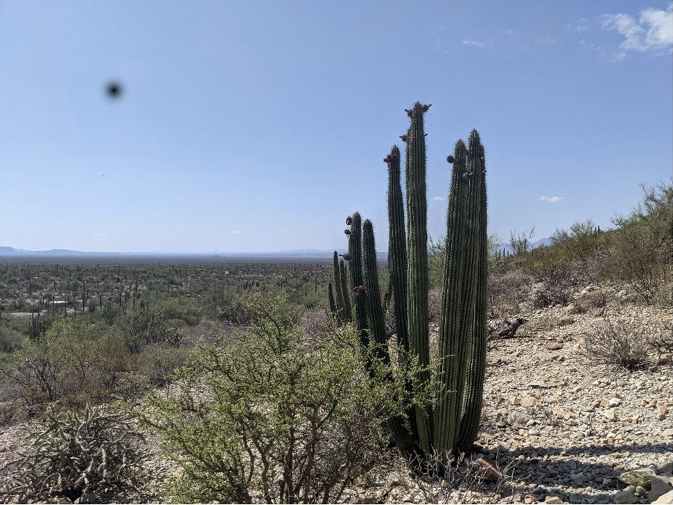
Fig. 11.1 The Sonoran Desert. Photo by author.
Now, as she looks out at the crumbling facility, she is almost nostalgic for that time when its air chiller units and diesel generators still hummed and rattled to keep its computers energised and cool. But now there is silence. A silence she had long craved. But now it aches with the loss. She studies the husk of the data centre, this tomb of the digital, now defunct, now bereft of the connectivity it promised. If only they could have predicted it would end this way. What her neighbours failed to anticipate was the strength of the tech industry to lobby for more and more data centres to flock to her part of the world. Making noise but also sucking up every drop of cheap water it could. They came in droves, building dozens of facilities all over the Valley of the Sun, some being constructed well after the mega-drought was declared. Their operators promised high quality jobs in the ‘tech industry’. Their spokespeople hailed the coming of the Valley of the Sun rebranded as a second Silicon Valley, with the Intel corporation semiconductor factory construction heralding a larger wave of tech development. But reality played out very differently.
Brenda scans the scrub desert that has taken over Chuparosa park and the chain-linked expanse of the data centre. She chuckles at the ‘private property no trespassing’ sign, so bleached by the sun that its letters are now displayed as ‘v-o-t-e no’ to anyone who might be seeing it for the first time. They all should have voted no. A few intrepid city officials in Mesa, Phoenix, and elsewhere, did (Solon 2021). But their efforts were undone by Tech’s relentless lobbying efforts and the misinformation campaigns precipitated by their allies in the government. The data centres came. One by one. Until the entire Valley was overrun with them. Each consuming as much energy and water as a small city.
Brenda remembers how wasteful everyone was before the data centres, how people spent water to maintain lawns and palm trees in a desert. But these data centres desiccated the land more rapidly than even the most delusional and wasteful of her neighbours had anticipated. Residents eventually started to complain when water prices began to rise, when the utility companies mandated water rationing and levied penalties for those who exceeded state-provisioned consumption thresholds, but the data centres thrummed on, largely unaffected, their water use protected by ‘trade secrets’ and ‘grandfathered in’ to price contracts drawn up years before the droughts had become politicised. Politicians rallied to their side, claiming that climate change was a fiction and that the drought would abate on its own. They talked about the bright future that tech and the AI boom would bring about, warning that regulation might drive them away.
Brenda approaches the chain-link fence, peering at the old building, its windows still-boarded up, its grey walls now adorned with bright red expletives written in spray paint. Cloud too loud. Not in my backyard. Drink dirt. There are no jobs here. It amuses her to see the fortress breached by angry vandals, misfit teens or even the few disgruntled neighbours who remained long after the data centres shuttered, bringing the local economy with them. The younger Brenda might have scoffed at such ‘graffiti’ in her neighbourhood. After all, she fled the Phoenix metro area to build a peaceful life in suburbia, away from the ‘riff-raff’ of the Big City. But now, it pleases her to see the mighty facility descend into this dilapidated state, even if its decline also means her paradise has turned to ruin; her suburbia has become like the ‘ghetto’ she fled.
When the politicians started talking about regulation, it came too late. Rolling blackouts had plagued the city for months, the data centres taxing the local electricity grids too much. By then the Valley’s water reserves had reached critically low levels. The tech companies responded by announcing the construction of more solar farms. When the farmers gathered outside their office headquarters to demand cuts to their water provisioning, their PR department released a statement claiming that the data centres ‘recycled’ most of the water they used. Later that year, an investigative journalist reported that their definition of ‘recycling’ meant dumping the water into the soil to evaporate, as if the Albedo effect would redress the desertification that their computational industry was rapidly precipitating. Coming to their defence, pro-tech politicians spun it as ‘trickle down hydraulics’. The Arizona government announced plans to import water from Mexico, and in the meanwhile, the local water utilities began to add salt to the drinking water, to make it go farther, borrowing from the Uruguayan government’s playbook.
That was the beginning of the end. The biggest names were the first to close up shop. Their closures, unapologetic and accusatory, blaming forces beyond their control. Climate change. Market forces. Public interest. Blah blah blah. They barely flinched as they lied. The aquatic gold rush came to a dusty halt, so they got out while they could. But others, like the one in her backyard, lingered. Soaking up every last drop, until the city had to step in, forcing them to vacate. Slapping them with so many fines that they decided to cut their losses, leaving this shell behind, undemolished, a monument to their broken promises and wanton greed.
For most of her adult life, Brenda had voted Republican, but after the data centres vanished, spiralling the Valley into an economic downturn, her views began to shift. The greater Phoenix metro area suffered a similar fate as Detroit; the rapid departure of the data centres came at a cost, but unlike their factory antecedents in the Midwest, they employed so few and cost the locals so much more than they were ever worth. All this turmoil, all of her time spent as an activist opposing the data centre for its noisy emissions, had felt like it had been for nothing. So, a few months ago, Brenda decided to do something about it. Now, she walks to the entrance to the parking lot, where her sign is gilded by the morning light. Brenda for Mayor. From Cloud to Ground, Prosperity without Tech.
Afterword
Since 2015, I have studied cloud storage ethnographically, embedding myself as a participant observer in data centres (Gonzalez Monserrate 2023) and the communities that surround them. I have been particularly interested in the environmental politics of data storage and computational activity more broadly. In 2021, I conducted fieldwork in the greater Phoenix metro area, studying how data centres clustering there are impacting communities as they emit noise and draw vast quantities of electricity and water to operate (Gonzalez Monserrate 2022). Brenda is a composite character I have fashioned to represent a number of activists I shadowed in the city of Chandler, who mounted a grassroots opposition to data centre expansion in the Valley due to their water use and the noise pollution they produce (Bosker 2019). The above speculative vignette is a forecast of tomorrow informed by this fieldwork and alarming trends in the region.
Per a recent study, one-fifth of data centres in the United States are sited in stressed watersheds (Siddik et al. 2021). They are among the top ten industrial consumers of water (Siddik et al. 2021). The greater Phoenix metro area is in the midst of what climatologists are calling a megadrought. Despite this, data centres continue to flock to the southwest, with new facilities under construction and further contracts approved through 2025. In other contexts, the promises of economic prosperity and job creation that presage the arrival of data centres have proven to be misleading, if not outright false, given the few dozen people it takes to operate a facility once it is constructed (Hu 2015, Vonderau 2017). Motivated by a confluence of lucrative tax breaks, climate denialism among elected officials, cheap electricity and water, tech companies are seizing the opportunity to compute in the extreme arid conditions of the Sonoran Desert (Solon 2021). Even they must be able to see the future ahead. Data centres are anything but permanent, as scholars have shown (Mayer 2023). Like the gold rush that left ghost towns in its wake across the American West, the data centres too must know that aquatic veins will eventually dry, and their time will come and go. What will it cost?
Steven Gonzalez Monserrate is a postdoctoral researcher in the Fixing Futures research training group at Goethe University in Frankfurt. A recent graduate of the History, Anthropology, Science, Technology & Society (HASTS) PhD programme at the Massachusetts Institute of Technology, Dr Gonzalez ethnographically investigates the environmental politics and impacts of data centres in New England, Arizona, Puerto Rico, Iceland and Singapore. Committed to public engagement and accessible scholarship, his writing and research appears in venues including Wired, Aeon, Popular Science, Anthropology News, ABC News, BBC News, NPR and more.