13
Clock
Sun-ha Hong
I met an entrepreneur from the Valley who said – ‘I’ve seen the Clock.’
A towering, sixty-metre edifice, nestled within a grand mountain range, programmed to record and announce no less than ten thousand years: a monument to long-term thinking from the Valley’s brightest minds, he explained.
At least, that remains the vision. Half a century has passed since the Clock’s inception in 1986, with little clarity as to when or if it will be complete. Not that this troubles the tech elite visionaries behind the project: the elusiveness of the monument is itself meant to symbolise the Clock’s dedication to long-term thinking. Invoking David Nye’s study of the technological sublime, they proclaim: ‘the more over the top it is the better it works’ (Brand 2000: 48). Bold, speculative futures by the enlightened few, inscribed literally into the planetary façade – all to inspire future persons to think civilisation the right way (Karpf 2020).
Yet the Clock’s own narrative of progress has decayed over time. Prototypes have come and gone, and most of its original visionaries – Stewart Brand, Kevin Kelly, and other stalwarts of a twentieth-century vision of technological futures – have now grown old. More troublesome has been the waning interest from the latter-day robber baron Jeff Bezos, whose forty-two million dollar pocket change was crucial for construction to actually begin in 2018. In recent years, the aging Bezos has become increasingly fixated on escaping mortality at a more personal level. Alongside his space ventures, rumours abound of investments in cryogenics, and his vast Texan properties are suspected to conceal sprawling networks of survivalist bunkers underground. Public mythmaking is pleasure, private security is necessity.
Not that Bezos is alone among the tech elite in this inward shift, away from the messiness of public opinion and debate. Escape pods for the rich have long been a regular rite of passage for the tech elite, from Peter Thiel in the 2010s to Sam Altman in the 2020s. Recently, a journalist was able to check in on many of these survivalist bunkers, and found most of them in trouble. As the various sensors and software systems broke down over time, owners discovered that most of the start-ups behind the tech had disappeared without a trace. Even the bunkers had expired, waiting for the future that had not arrived on time.
And so, I asked my new friend – ‘what did you really see?’
‘The Clock of the Long Now,’ they replied, ‘is an inspirational project; a rational and modern approach to the technological future.’
It is a tempting thought. The pace of AI development has plateaued in recent years, but short-term mania is a persistent smog around technological development. McKinsey has again updated its multi-trillion valuation of AI industries, adding more room year after year for bullish corporate projections and accompanying hype. Critics quibbled that previous estimates1 of multi-trillions had not exactly materialised, but past disappointments are rarely permitted to dampen future expectations. Predictions of the Singularity – already a robust cottage industry by the 1990s – have developed into a public pastime. Having learned from the mania around early generative chatbots, the latest AI agents are now designed to introduce themselves with witty responses to the question: ‘are you sentient yet?’
The Clock proposes to cure such predictive mania with megalomaniac predictions of their own: to think the world and its problems in massive timescales, to dream the ebb and flow of civilisation over millennia. Its approach to the long term builds on the paper-thin rationale that since future populations will surely ‘outnumber’ us, maximising their putative needs is the moral thing to do: the ‘greatest good for the greatest number’ (Brand 2000: 8). This analytical parlour trick, I thought, was exactly what we had just been through in the brief global frenzy around longtermism: a momentary alliance of hyper-utilitarian thought experiments and deep-pocketed tech billionaires. With a penchant for throwing around ‘mathy’ (Romer 2015) back-of-the-napkin calculations about optimising the happiness of far future populations, longtermism had become briefly popular in the 2020s, serving as a conduit for older, decrepit theories around eugenics and race sciences (Gebru and Torres 2024).
The tech billionaires’ flirtation with Oxford’s existential risk speculators did not last long, however. What the former wanted was ideological justification for a technological reset of civilisation by a revered elite like themselves. At some point, the robber barons knew to move on to the next source of cultural legitimacy – and not to take the useful idiocy of philosophical fodder too seriously.
It turns out that what really endures across the rise and fall of hastily concocted grand theories is a form of optimism: sometimes wielded with righteous bombast, at other times sombrely presented as a rational conclusion built on sweeping, teleological interpretations of technological change. Common to both is a logic of ‘chrono-washing’ (Bastian 2024). Present day crises, from climate disasters to AI harms, become understood not as deeply embedded disparities, but ephemeral fluctuations that will be smoothed out once the ‘long term’ is subject to more rational governance.
At the root, this optimism only requires an ideological commitment to predicting and managing the supposedly inevitable arc of technology. Imagining cheerful outcomes is optional. I told my new friend that folks had just announced a new, different Clock – funded and designed by a different internecine slice of the tech elite. It is to be a new Doomsday Clock, modelled after the work of the Bulletin of the Atomic Scientists in the previous century. Instead of metaphorising the impending danger of nuclear warfare, it would track just how close we are to an AI apocalypse. This was all very confusing; after all, the luminaries behind the Clock were also the ones funding and developing the biggest AI projects around. Utopia and dystopia, it seemed, were identical twins, their opposition a nice superficial coat of paint on top.
Almost exactly a century ago, a young architect named Albert Speer was commissioned by the Nazi Party for heavy mythological work: to design a grand structure at Zeppelinfield, the site of the Party’s annual rally. The story goes that Speer submitted not only the plans for the completed structure, but a second drawing of the field a thousand years later in beauteous ruin. While many were ‘scandalised’, Hitler apparently enjoyed the notion that Germany too could call on ancient ruins for historical legitimacy the way Mussolini had been doing so well with Rome (see Nowviskie 2015; Ishida 2020). Speer would go on to specialise in aesthetically degradable materials – usually stone over steel – as a way to build the ruins of the Reich into its triumphs. Or at least, in theory: soon after the war began, material shortages often forced a dependence on ‘depressing’ concrete, subsequently reduced to unsightly rubble.
In one moment during its decades-long conceptual gestation, the makers of the Clock of the Long Now raised their own concerns: how could they design a monument to last ten thousand years? A provisionary answer came in the form of silicon and silicon carbide: not materials that degrade beautifully or slowly, but those known to scientists to ‘just plain not change state’ (Brand 2000: 68). As much as possible, the Clock had to seek a future that does not abide ruin –- a technological future dreaming of escaping mortality.
For centuries, a ‘cult of ruins has accompanied Western modernity in waves’ (Huyssen 2006: 7). Giovanni Battista Piranesi’s eighteenth century drawings weaved precise, architectural sketches of Roman ruin with imaginary objects and experimental space, overwriting contemporaries’ ability to remember and imagine its legacy. Goethe found, seeing Rome for the very first time in person, that it could not live up to what he had seen already through Piranesi (Wendort 2001: 162). Today, those trembling in fear and anxiety for the ‘white race’ have also taken to ruins with renewed passion, obsessing over Roman marble and Gothic steeple as symbols of a racial reconquista. Computer-generated footage of blonde, blue-eyed boys shaping nature into castle and cathedral has become their junk media pastime.
A theory of ruins is a politics of futures presented as if a natural law of time. The Clock wanted to never become a ruin, but perhaps it always was one: a manifestation of future predictions that is also a prediction of a hypothetical archive. Predictions borrow legitimacy from futures in order to launder speculations in the present (Hong and Szpunar 2019). Grand, long-term gambits can keep the loan going over the decades, riding the waves of individual failed technologies. The Clock’s visionaries were right, after all: the more over the top, the better it works – to keep society encased in the reverberating echoes of a future, their future, trapping future generations in the shadow of the stupid utopias of our time.
As Derrida once said: ‘The archive, if we want to know what it would have meant, we shall know only in the time to come’.2
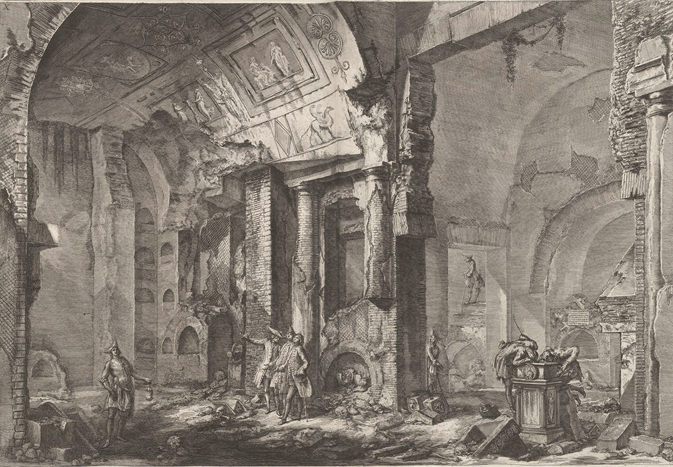
Fig. 13.1 Le Antichità Romane. Giovannia Battista Piranesi (1756, 41). Public domain.