5
Woven witness: Philomela, Procne and visualised narratives through textiles
Anthony Tuck and Cole Reilly with Cinzia Presti and Joseph Capozzi
Procne, Philomela and the play of Tereus
The narrative of the Athenian princess Philomela is among the more troubling of the corpus of Greek myths.1 Philomela’s sister, Procne, is married to the Thracian king Tereus. After years of marriage, Tereus ventures to Athens, promising to bring Philomela back to visit with her sister. However, on their journey, Tereus betrays Procne and rapes Philomela. To obscure his violation of his wife’s sister, Tereus cuts out Philomela’s tongue. Now voiceless, Philomela weaves the account of her rape into a textile, a cloth that is presented to Procne. Upon receiving this textile and learning of her husband’s actions, Procne kills their child, Itys, and feeds him to Tereus.
The grisly myth was the subject of a play by Sophocles (since lost), entitled Tereus.2 The original performance of the play may have been memorialised by the commissioning of a statue depicting Procne moments before the murder of Itys, an image that was originally placed on the Akropolis of Athens (figure 5.1).3 The play’s limited surviving fragments provide few clues as to its original staging, but a curious reference to the play in Aristotle supplies a hint as to a prop likely used to facilitate Procne’s recognition of Tereus’ crime. Aristotle appears to suggest Philomela uses the ‘voice of the shuttle’ to communicate with her sister.4 In the absence of the play’s text, the precise meaning of this phrase remains obscure. Clearly, Philomela’s glossectomy renders her mute, but her ability as a weaver permits her to communicate with her sister in unusual detail.
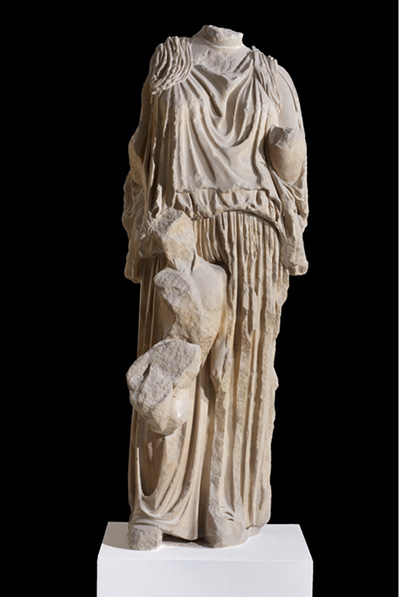
Fig. 5.1 Procne & Itys, Athens Akropolis, late fifth century BCE (photo by Marios Philippides)
While the limitations of available evidence make certainty on many points impossible, we may still profitably speculate as to how Philomela’s textile could communicate in this manner. One solution is simply to imagine that Procne receives Philomela’s textile and moves offstage to examine it, returning to report what she has learned. However, recent work on props in Athenian drama argues that some objects ‘attain the status of silent, nonhuman characters’ (Mueller 2016: 7). Aristotle’s characterisation of the ‘voice of the shuttle’ certainly appears to support this claim and suggests that Philomela’s textile was an intended, visible feature of the performance. Other aspects of Sophoclean drama definitely employed props and it seems reasonable to assume that Tereus did in this case as well.5 Therefore, it is likely that the play’s original staging would have required the use of an actual textile of some form to facilitate the performance’s anagnorisis scene.
Most attempts to reconstruct the play suggest Philomela weaves an actual text into her cloth (Dobrov 1993: 204; Fitzgerald 2001: 97–98). A minority of scholars have suggested the narrative is communicated through pictorial tapestry (Cahill 1995: 29–30). Either is possible, although both solutions create additional problems of prop design and staging. Indeed, it is difficult to imagine how Tereus would remain unaware of Philomela’s strategy if he were present during the production or presentation of either form of cloth.6 To these possibilities, we might add another. Sophocles’ performance may have employed a textile depicting a geometric or non-figural pattern. However, as we will detail below, an Athenian audience may have potentially understood that non-figural patterns in textile could result from performed, mnemonic devices taking the form of metrically organised narratives encoding information related to those patterns. Conceivably, women from the same family who grew up producing textiles together would be able to recognise underlying narrative forms from whatever pattern resulted from the intertwined processes of recitation and weaving.
Textile production and song
The metaphorical notion of poetic performance as an act of weaving is widely observed across a range of linguistic and poetic traditions (West 2007: 36–38; Nagy 2008: 2§92; Fanfani 2017). However, observation of modern weaving in non-industrialised areas of central Asia shows that, within domestic spaces, there exist traditions of singing while weaving (Tuck 2006).
For example, the nineteenth-century rug merchant John Mumford records the following concerning the production of textiles in central Asia:
But in the more remote sections, and among the nomads, women do all the weaving. They are the designers, too. They invent from year to year all the modifications of the old patterns. The head woman, the traveler Vámbéry relates, makes a tracing upon the earth, doles out the wool, and in some of the tribes chants in a weird sing-song the number of stitches and the color in which they are to be filled, as the work goes on (Mumford 1900: 25).
Recent ethnomusicological documentation captures a similar, surviving tradition in Iran (Aminian 2020; Aminian forthcoming; Seyf 1990: 210). Naqshe Khani – or Pattern Singing – possesses a number of regional variations. In southeast Iran, musical phrases are repeated with lyric variations signalling changes in the colour, count and position of knots in pile carpets. In this instance, the singing coordinates the knotting of multiple weavers, controlling the symmetricity of the woven design. Each repeating musical phrase communicates the number of knots of a given colour and their direction, and concludes in an audible shift in tone, signalling the end of that element of information.
The consistent characterisation, throughout Homeric poetry, of women singing while engaged in weaving (Tuck 2006) invites comparison with Mumford’s description of central Asian women performing a ‘weird sing-song’ related to the numerical position of specific points of coloured thread within a large, knot-pile composition. While the text of the Odyssey does not record any detail concerning the songs of Calypso and Circe, the weaving of Circe is described as producing a ‘great design,’ suggesting some sort of patterning (Od. 10.220–28). Later texts such as that of Euripides’ Hecuba record a similar tradition of singing in association with textile production, as does a fragment of Sophocles’ Epigonoi (Euripides Hecuba 218–24; Sophocles Epigonoi, P Oxy 4807).
Furthermore, Euripides’ Ion indicates that the environment of textile production sometimes involved the recitation of mythological narratives (Tuck 2009). In the passage below, the play’s chorus observes the elements of the sculptural decoration of the Temple of Apollo at Delphi, recognising the images depicted because they hear the stories while weaving.
Apollo’s temple too has the twin pediments,
Like brows on a smiling face
Look at this! The Lernian snake
Being killed by Heracles with his golden falchion
Do look, dear!
Yes, I see. But who is the other next to him
Waving the flaming torch? Is it the man
Whose adventures we are told at weaving-time,
The brave fighter Iolaus
Who went with Heracles to his labors
And stayed until the bitter end?
Oh! And look here
At Bellerophon astride his winged horse
Killing the monster with three bodies
And fire belching from its nostrils!
I am looking eagerly on every side.
See, carved on the marble wall
The Giants overcome by the Gods in battle!
Yes, we can see it from over here.
Ah! But behold her there, brandishing
Her Gorgon shield over Enceladus –
I see her, my own Pallas Athena!
And the thunderbolt, smoldering and irresistible,
Which Zeus holds ready to hurl form heaven!
I see huge Mimas fiercely raging,
Charred with the flame of the thunderbolt.
Here’s another earth-born giant
Destroyed by Dionysus with no weapon
But his thyrsus wreathed with ivy-shoots (Vellacott 1954: 40–41, emphasis added).
It is also encouraging to note that an Athenian audience witnessing a performance of the Ion would recognise that three of the mythological episodes described by the play’s chorus are drawn from the Gigantomachy, a subject matter directly related to the production of the peplos of Athena, a garment that depicted the very same mythological narrative (Barber 1992). The correlation between stories heard while weaving and episodes from the Gigantomachy hints at a tradition – that would certainly be known to an Athenian audience – linking the performance or recitation of certain narrative forms to ritualised production of specific types of textiles.
Perhaps reflecting a similar phenomenon from an adjacent linguistic and cultural environment, a loom weight now housed in the Archaeological Museum of Este, Italy, preserves an inscription that has been translated as follows:
Between the warps with speedy bobbins
You weave and sing your songs of heroes7
Modern research concerning the sung performance of Homer and early musicality has illuminated many aspects of the auditory environment wherein such narrative would have been received (West 1981). However, and perhaps understandably, comparably little academic attention has sought to reconstruct the audial environment of textile production in Archaic manufacturing environments (Restani 1995). And yet, the few available points of evidence suggest that singing, perhaps related to numerical position on a loom, and potentially also at times in the form of mythological narratives, may have guided the production of pattern textiles in environments like that envisioned by a playwright such as Sophocles and in which he placed his character of Philomela.
This observation may help explain how Sophocles’ audience would have understood the idea of the ‘voice of the shuttle’ and a textile that communicates a complex narrative. Within a family’s tradition of weaving, we might imagine that specific patterns – abstract or otherwise – would have been immediately recognisable to siblings as representative of larger narrative forms.8
A proof of concept
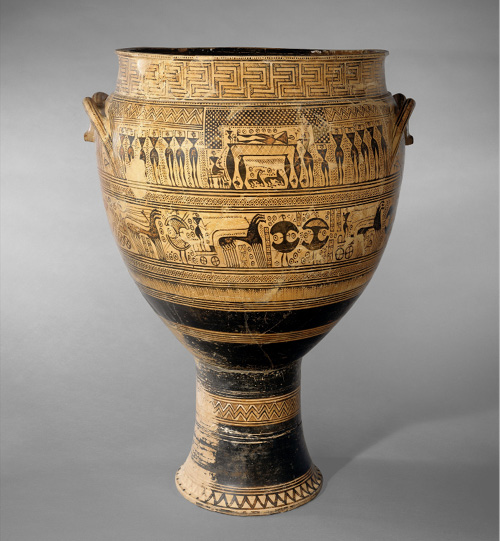
Fig. 5.2 Pedestal Krater, Athens, mid eighth century BCE (photo credit: Metropolitan Museum of Art Open Access Collection)
Reference to the Philomela myth in Homer and Hesiod suggests critical aspects of the legend were known to the Greek population at a point at least as early as the early Archaic period. Given the nature of the organic materials used in their production, examples of textiles dating to this period are extraordinarily rare. However, numerous depictions of textiles are found on ceramic vessels associated with visible aspects of burial from this period. For example, numerous large ceramic amphorae and kraters used to mark places of burial employ scenes of prosthesis (Souza and Dias 2018). The body of the deceased is placed upon a bier as mourners stand to either side. Immediately beside the bier, mourners or attendants lift a funerary shroud, revealing the body of the deceased (figure 5.2). In virtually all such scenes, the image of the shroud is depicted with the same pattern of a repeating checkerboard-like design. Curiously, examples of lekythoi of later date – vessels frequently associated with funerary behaviours – are sometimes ornamented with a notably similar pattern. Several such lekythoi employ the pattern in a slightly diagonal form or with subtle variation in the geometry of the design, such as that visible in figure 5.3.
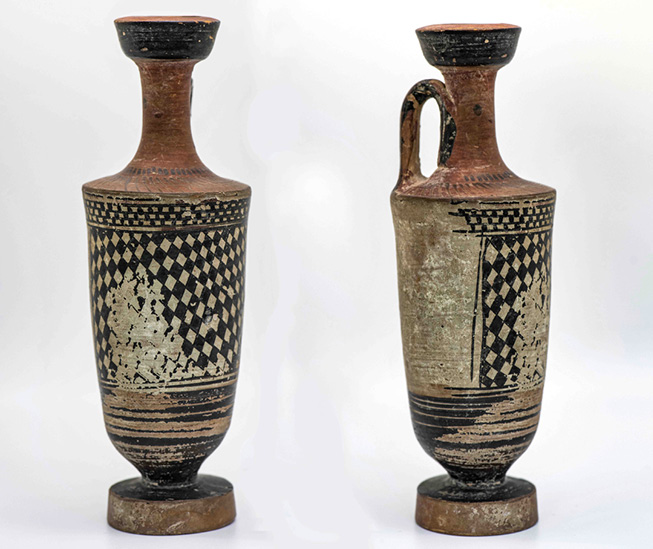
Fig. 5.3 Attic Lekythos with checkerboard pattern, mid fifth century BCE. Collection of Smith College (photo credit: Anthony Tuck with permission Prof. Scott Bradbury, Curator of the Smith College Cabinet of Antiquities)
As we will attempt to show below, the patterns represented on these types of ceramics display a curious similarity to graphic representation of certain metrical forms. To return to the myth of Procne and Philomela, an ‘intact’ version of the myth survives only in very late sources (Ovid Metamorphosis VI, 400–674). However, it is highly likely that if earlier versions of it were part of, and performed as part of, a rhapsode’s repertoire, their performance would have followed the metrical structures seen in the rare examples of surviving texts of the early Archaic period – e.g., the Iliad and Odyssey.
The generational relationship of these two surviving Homeric texts to the forms that such narratives took during the Early Archaic period is challenging to reconstruct. However, if the performance of early versions of such poems was structured according to the metrical rules of dactylic hexameter (West 1982: 35–39), then it is possible to deduce at least a few features of the audial environment of their performance (West 1981: 114). The audience would hear variation in long and short vowels, with certain expressions of such variation occurring with predictable regularity. If we then imagine that such long and short vowels signalled to weavers some variation of dropping over or under the warp threads of a loom, those metrical forms would result in predictable patterns.
To test this concept, we imagined a scenario wherein the metrical patterns of the text of the Iliad communicated such information. Manually graphing variation of long versus short vowels is possible but was deemed prohibitively time consuming. In order to facilitate the quick production of multiple visualisations of patterns resulting from the visualisation of the Iliad’s meter, we constructed an algorithm, implemented in the Python programming language, that does the work of populating a weave pattern and saving it as an image.9
The scansion data for each book of the text was stored in its own CSV file, a filetype used commonly for simple spreadsheets. Each row of the file contains information including what line the sound is on, the number word the sound comes from, and whether the sound is a long or a short. An additional file was created conflating the metrical data for all 24 books stitched together into one continuous CSV.
In its simplest form the algorithm takes in the desired thread-count along with the specific book or books of the Iliad, and returns a 2D image where each pixel is coloured depending on whether the corresponding sound is long or short. The thread-count represents the number of threads that would have been in the loom, and as such is the number of pixels along the horizontal axis of the image. The algorithm constructs a table that has columns equal to the desired thread-count, and however many rows are needed to represent every sound in that book or books. The algorithm then looks at every sound in order and puts in colour data for that sound in the correct cell. The colour data is represented in an RGB value, and the cells were originally populated left to right, top to bottom. Later, in order to capture a more accurate form, the image was created by mirroring a boustrophedon-like style of the directional reversing of a shuttle passing through repeated sheds. For example, if the algorithm were fed the pattern short – short – long, the thread-count was set to 2, and short was black and long was white, the algorithm would construct a 2x2 matrix like this:
|
(255,255,255) |
(255,255,255) |
|
(0,255,0) |
(0,0,0) |
The top left cell is populated first, then the top right. From that point the algorithm moves down a row and populates the bottom right cell. When converted into an image each cell becomes a pixel with the colour of whatever is written in the cell. This would then become an image with a black line across the top, and below it a line that is half green and half white. Green serves as the default colour to make any errors in encoding obvious. The algorithm also has an enlargement process, where it takes a value ‘k’, and each cell is represented as a block of k by k pixels (if k=2 the cell is a group of 2x2 pixels, creating an image that would be 4 times larger). This process only increases the resolution of the final image and does not affect the placement or order of the cells in any way.
We call that algorithm ‘singleweave’, as it produces a single representation of a pattern at a specific thread-count. This creates single image visualisations of the poem’s meter expressed at a specified horizontal count. While this method was initially useful, our team quickly realised that our inability to predict possible relationships of such patterns to a hypothetical loom’s warp thread-count made the resulting, episodic representation less useful than we had hoped. As a result, we designed a slightly more advanced algorithm which we called call ‘multiweave,’ as it produces multiple weave representations at different horizontal count sequences. It does this by taking in a step count, calling the singleweave algorithm with a thread-count equal to the given step count, incrementing the step-count, and after the weave representation is saved as an image, repeating that process until the desired number of images is made. Multiweave always ends when the next thread-count is larger than the number of short and long sounds in that book or books, as this would create a weave representation that only has a single row. Both algorithms produced the described result trivially, and as such a formal mathematical proof of correctness will not be provided. The worst-case running time of an algorithm describes in terms of the provided input the maximum amount of time required to finish running the algorithm. The worst-case complexity of singleweave is O(n*(k^2)) where n is the number of sounds considered, and k is the magnification number. In order to create the image, each of the n sounds has to be looked at and placed into the grid, and each one of those spots on the grid has to be enlarged into a k by k square, where k is the desired enlargement value. The worst-case complexity of multiweave, then, is the time it takes to run singleweave s times, O(s*n*(k^2)). Each progressively greater number of the horizontal count is represented as an expanding grid, which allowed us to see certain repeating patterns as the horizontal count grew. However, while intriguing, none of the resulting patterns could be described as sufficiently coherent as to justify the belief that the poem’s meter contained obvious, expressible patterns.
For example, figure 5.4 represents the metrical form of the Iliad in its entirety at a point count along the horizontal axis of 775 points when expressed through this process. To better mimic the weaving process, the metrical pattern is represented in a boustrophedon form – with its directionality alternating between left and right with each successive register.

Fig. 5.4 Iliad graph at 775 point count
Following this experiment, we were challenged to imagine an audial environment wherein some specific, repeating feature of the poem’s meter signalled a shift or change in either the form or visibility of the associated visualised space.10 We imagined that the audible form of the two short vowels of each dactyl might represent a point at which a weaver dropped beneath a warp thread. To explore this possibility, the algorithm was modified slightly. Instead of having each syllable expressed with its own cell, pairs of short vowels were given a single cell on the table.
In order to accomplish this, the algorithm kept track of the last sound it found. When the next row of the CSV was looked at, the algorithm checked to see if the last sound it saw was short – if it was not, then the program continued as normal. If the last sound was short, the program skipped this current sound and moved directly onto the next. It did this knowing that the sound following a short sound will always be another short. This thus produced the desired effect: short pairs of vowels were represented as a single pixel instead of two, and nothing else concerning the representation was changed.

Fig. 5.5 Iliad graph at 775 point count and single short
When the poem’s metrical structure in expressed in this manner, a considerably greater degree of pattern coherence emerges. For example, figure 5.5 represents the entire poem’s meter visually expressed according to this variation along a horizontal axis of 775 points.
This point count results in a latent hatched pattern which is a result of the regular position of the spondees that conclude each line. Similar patterns with either hatched or diagonal emphasis tend to result from point counts of odd numbers. Conversely, point counts of even numbers tend to result in vertically oriented pattern forms.
Of course, this graph of the Iliad at a point count of 775 represents the approximate metrical structure at the terminus of the Iliad’s textual tradition. Changes and alterations to the text over the course of time between its original conversion from an oral phenomenon into a text and the earliest surviving manuscript of the text surely occurred, and make impossible any attempt to reconstruct the ‘original’ form of the poem – if such a notion is even applicable to the living tradition of an oral poem. Moreover, the oral form of the poem would have been subject to a range of possible variations depending on any given rhapsodic performance. These changes to metrical patterns such as enjambment or substitution of concluding spondees for trochees would have made little difference in the performance of the poem. However, a weaver reproducing patterns in textiles would have had no such flexibility. Therefore, as an additional experiment, our team decided to graph the ‘ideal’ metrical pattern of traditional Homeric hexameter. This artificial form simply graphed at repeating intervals 17 units representing the following form:
DACTYL/ DACTYL/ DACTYL/ DACTYL/ DACTYL/SPONDEE
This sequence then consists of: Long/Short/Short: LSS:LSS:LSS:LSS:LL
When each double short is expressed as a single point, the linear counts are arranged in multiples of the 17 ‘syllables’ of each line, and the directionality of each register is reversed in each successive row, a range of predictably geometric patterns form. By way of comparison, this ‘pure’ dactylic hexameter, represented in figure 5.6 at the same 775 point count as the image of the Iliad’s meter shown above, looks like this:

Fig. 5.6 Perfect dactylic hexameter at 775 and single short
The pattern shown above represents only the ‘pure’ form of hexameter – LSS/LSS/LSS/LSS/LSS/LL. A weaver interested in replicating this specific pattern would need to maintain this count sequence without variation throughout the entirety of a textile’s production. However, work upon a warp- weighted loom does allow a weaver a considerable degree of flexibility in altering patterns throughout the process of production. If a weaver were translating a metrically structured narrative into a woven design, regular changes to that metrical pattern would therefore produce predictable, repeating variations to the resulting woven pattern.11 As many scholars have noted, the registered arrangement of the ornamentation of geometric vase painting is notably similar to woven geometric designs produced in this manner (Barber 1991: 365–72). Moreover, this pattern is strikingly similar to the stylised representations of actual funerary shrouds found on eighth-century BCE vase painting shown above.
Forstall and Scheirer’s observation that Long/Long combinations occur with unusual frequency in the first position of a line of the Iliad encouraged our team to graph another version where two lines of 17 syllables begin with such a double long. The third line in the sequence returns to the ‘ideal’ dactylic hexameter form with the first position occupied by a dactyl. At a count sequence of 788 shown in figure 5.7, the resulting graph creates strong zigzag lines and appears thus:

Fig. 5.7 Dactylic hexameter variation at 788 point count and single short
Another expression of the same metrical patterned rendered at a horizontal point count of 850 in figure 5.8 produces an elegantly complex checkerboard pattern:

Fig. 5.8 Dactylic hexameter variation at 850 with single short
In total, this experiment generated thousands of different types of patterns, although the limitations of this published format only allow the presentation of a few representative samples. Moreover, those presented here only represent repeating patterns based on sequences of five or fewer ‘ideal’ or modified ‘ideal’ lines of hexameter. The repetition of these sequences when visualised in this manner inevitably creates these regular, geometric forms (Harlizius-Klück 2019). We are confident that with additional, detailed development, it would be possible to utilise such graphic representation of metrical variation to produce a wide range of geometric patterns. Moreover, we are especially encouraged to note that the geometric pattern employed on the depiction of a funerary shroud of a mid eighth-century grave marker shown in figure 5.2 represents a pattern easily produced by such a formula.
Of course, the metrical pattern of poems such as the Iliad is only one feature of how such poems would have sounded when performed – and it bears repeating that the Iliad in its surviving form is not an example of a metrically structured mnemonic device associated with textile production. Instead, we speculate that the poem’s metrical form bears some ancestral relationship to such woven patterns, patterns that appear when graphed in the ‘ideal’ forms presented above. In the hypothetical space of a weaver, musicality such as that of the Odyssey’s Circe or Calypso and/or narrative forms such as those of Ion’s chorus girls embedded coded information used to signal changes to count or position on a loom, resulting in any number of imaginable variations to these basic patterns.
Potential applications and concluding thoughts
This test of concept shows that metrical patterns used to structure narratives could once have been associated with encoded information resulting in textile patterns. As a result, we might imagine how Sophocles’ plot device of the ‘voice of the shuttle’ and the resulting textile was understood by an audience as communicating narrative information. If an ancient audience for Sophocles’ play were aware of traditions of mnemonic devices, perhaps dismissed even then as ‘weird sing-songs,’ that conveyed narrative along with encoded information that could be rendered as a coherent pattern, perhaps this knowledge would be enough to signal to an audience how sisters might communicate in this manner.
In the same way that figures 5.4 and 5.5 represent the metrical pattern of the Iliad’s entirety when expressed at a specific point count, we might imagine how weavers, sufficiently attuned to the relationship between pattern and narrative, could recognise narrative and even communicate through similar abstract forms. The specific effect of designed variations in the code that both communicate narrative and result in distinct geometric patterns would thus serve as both text and textile. There is much we cannot know about the earlier versions of the Procne and Philomela myth. Early and vague reference to it in Homeric texts do not preserve reference to the idea of a textile used to communicate such detailed information about Tereus’ crime. However, if this element of the story was present in versions of the myth contemporary with the formation of the Homeric and Hesiodic poems in which they are alluded to, we can be confident that the method of communication used by Philomela was not traditional literacy. The technology of literacy was simply not widely present in the Greek world at such an early date.12
There is another, related way in which we might imagine Philomela’s textile communicating to her sister. Returning to the surviving text of the Iliad, the poem employs a prefatory statement well known to readers:
Anger be now your song, immortal one,
Akhilleus’ anger, doomed and ruinous,
That caused the Akhaian’s loss on bitter loss
And crowded brave souls into the undergloom,
Leaving so many dead men – carrion
For dogs and birds; and the will of Zeus was done.
Begin it when the two men first contending
Broke with one another – the Lord Marshal
Agamemnon, Atreus’ son, and Prince Akhilleus.13
This introduction to the poem contains, in broad strokes, the poem’s entire plot. It serves a function akin to a modern serialised television show’s introduction – introducing characters and establishing tone. Given the modular structure of the poem and the nature of rhapsodic performance, we might imagine this passage serving in a similar manner, repeated at the beginning of any performed portion of the poem. Moreover, as a synopsis of the poem’s plot, the metrical sequence of these seven lines, repeated sequentially, would form clear, coherent patterns as well.
That metrical sequence consists of:
| – u u | – u u | – – | – u u | – u u | – – |
| – u u | – – | – u u | – – | – u u | – – |
| – – | – – | – – | – u u | – u u | – – |
| – – | – – | – u u | – u u | – u u | – – |
| – – | – u u | – u u | – u u | – u u | – – |
| – – | – – | – u u | – – | – u u | – – |
| – u u | – u u | – – | – – | – u u | – – |
When expressed at a horizontal point count of 799 in figure 5.9, we see the following pattern:

Fig. 5.9 Iliad introduction at 799 with single short
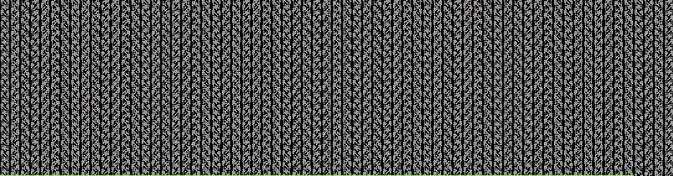
Fig. 5.10 Iliad introduction at 806 with single short
At a horizontal point count of 806 in figure 5.10, the design reverts to vertical forms such as this:
As seen with the graphs presented above, varying point counts result in widely varying versions of such repeating designs. And it bears repeating that to a weaver familiar with such patterns, they represent a synopsis of the Iliad as expressed in the poem’s first seven lines. For textile producers intimately familiar with the interrelations between these patterns and the formulaic synopsis of the Iliad’s introduction, they would serve as recognisable representations of that narrative, even if appearing to be mere geometric patterns to those unfamiliar with the encoded information.
If the Procne and Philomela myth originally contained some version of events wherein textiles communicated a form of narrative information, we might imagine that versions performed by rhapsodes imagined a textile produced by some version of the story itself. This use of textile to depict the events of the story wherein the textile is made is seen in Book III of the Iliad as well, wherein Helen herself is described in the act of weaving images of the events unfolding on the plain below her (Il. 3.126–30). Perhaps Philomela, in a similar manner, was imagined producing a representation of her own myth.
As the speculations presented here show, there is little about the early versions of the Philomela and Procne myth we can know with certainty. However, the glimpses of evidence that survive in the literary record, as well as the documentation of modern ethnomusicology and anthropology, clearly show that singing was a feature of textile production in the ancient experience and remains so in some regions of the world today. Expressions of the ‘weird sing-song’ of central Asia or the Naqshe Khani in present-day Iran show how repeating musical phrases serve as the conduit for information-sharing related to patterns in the production of knot pile carpets. However, this tradition may be but one regional variant of a much more widespread phenomenon, one that suggest far more complex types of narrative information encoded patterning in similar ways. If so, it is appealing to imagine that the silent textile, like the silenced Philomela, might still find ways to communicate a far larger universe of narrative.
Endnotes
1 Knowledge of some form of the myth is recorded in Homer Od. 19.518–23. The story is alluded to in other works, including Hesiod’s Works and Days 568; Apollodoros 3.14.8; Pausanias 10.4.8; and Hyginus Fabulae 45. Ovid Metamorphoses 6.424–674, records a comprehensive, although very late iteration of the story.
2 Radt (1999), counts 17 surviving fragments of the play’s text. The play’s overall form is the subject of an attempted reconstruction, even though the surviving evidence is frustratingly insufficient to provide confidence on several points. See Fitzgerald 2001.
3 Stevens (1946), 10–11; Barringer (2005); Fitzgerald (2001): 90, n. 3 posits a terminus ante quem for the play at 414, casting a degree of doubt on the date of the play’s original performance and its relationship to the possible commissioning of this image.
4 Poetics 1454b 36–37 = Soph. fr. 595 Radt (1999); Fitzgerald (2001): 97.
5 Mueller, M., Objects as Actors: Props and the Poetics of Performance in Greek Tragedy (Chicago: University of Chicago Press, 2016).
6 Dobrov (1993: 205) imagines a staging of the scene wherein Tereus is on stage for the presentation of the textile. If so, it is possible that an actual text would have furthered the distinction between illiterate barbarian and elite, literate Athenian women.
7 Šavli, Bor and Tamažič 1996: 254–56. However, it must be noted that many translations presented in this volume have not met with wide acceptance. See Leeming 1998.
8 Öhrman (2018: 95–96) describes the industrial space of a Roman household wherein women of the same family would engage in this shared form of production.
9 The scansion of the Iliad employed in this project is available at Chamberlain 2020.
10 We owe this suggestion to Adriana Burton, a life-long weaver and essential contributor to this project.
11 Forstall and Scheirer 2012. This analytical study of the entirety of the Iliad’s text shows that variation to the formal meter tends to occur most frequently in specific metrical positions, perhaps providing a vestigial clue as to how weavers might have employed such variation.
12 The earliest extant expressions of written Greek are found in Italy and date to the later portions of the first half of the eighth century BCE. See Bietti Sestieri 1992: 184–85; Ridgeway 1996.
13 Iliad 1.1–7. Trans. Fitzgerald 1974.
References
Aminian, M., ‘“The Woven Sounds”: Demo documentary by Mehdi Aminian on pattern singing-Persian carpets’, https://www.youtube.com/watch?v=vhgHJ6xiau8 [accessed 30 October 2023].
Aminian, M., ‘Naqshe Khani: Weaving Sounds into Carpets’, in preparation.
Barber, E. J. W., Prehistoric Textiles: The Development of Cloth in the Neolithic and Bronze Ages with Special Reference to the Aegean (Princeton: Princeton University Press, 1991).
Barber, E. J. W., ‘The Peplos of Athena’, in J. Neils, ed., Goddess and Polis: The Panathenaic Festival in Ancient Athens (Princeton: Princeton University Press, 1992), pp. 103–17.
Barringer, J., ‘Alkamenes’ Prokne and Itys in Context’, in J. M. Barringer and J. M. Hurwit, eds, Periklean Athens and its Legacy: Problems and Perspectives (Austin: University of Texas Press, 2005), pp. 163–76.
Bietti Sestieri, A. M., The Iron Age Community of Osteria dell’Osa (Cambridge: Cambridge University Press, 1992).
Cahill, J., Her Kind: Stories of Women from Greek Mythology (Ontario: Broadview Press, 1995).
Chamberlain, D. https://hypotactic.com/use-the-source/ [accessed 13 January 2020].
de Souza, C. D., and C. K. B. Dias, ‘The Iconography of Death: Continuity and Change in Prothesis Ritual through Iconographical Techniques, Motifs, and Gestures Depicted in Greek Pottery’, Classica-Revista Brasileira de Estudos Clássicos, 31.1 (2018): 61–87.
Dobrov, G., ‘The Tragic and the Comic Tereus’, The American Journal of Philology, 114 (1993): 189–234.
Edmunds, S. T., ‘Picturing Homeric Weaving’, Donum Natalicium Digitaliter Confectum Gregorio Nagy (Center for Hellenic Studies 2012), https://chs.harvard.edu/CHS/article/display/4365 [accessed 20 January 2020].
Fanfani, G., ‘Weaving a Song: Convergences in Greek Poetic Imagery between Textile and Musical Terminology. An Overview on Archaic and Classical Literature’, in S. Gaspa, C. Michel, and M.-L. Nosch, eds, Textile Terminologies from the Orient to the Mediterranean and Europe, 1000 BC to 1000 AD (Lincoln, Nebraska: Zea Books, 2017), pp. 421–36.
Forstall, C. W., and W. J. Scheirer, ‘Revealing Hidden Patterns in the Meter of Homer’s Iliad’, Proceedings of the Chicago Colloquium on Digital Humanities and Computer Science 2012, https://tesserae.caset.buffalo.edu/blog/wp-content/uploads/2012/10/forstall-scheirer.dhcs2012.pdf [accessed 30 October 2023].
Fitzgerald, D., ‘Tereus’, The Classical Quarterly, 51(2001): 90–101.
Harlizius-Klück, E., ‘Das Pepita-Virus – Herstellung und Verbreitung eines Stoffmusters’, 2012, http://www.saumweberei.de/http:/www.saumweberei.de/das-pepita-virus-herstellung-und-verbreitung-eines-stoffmusters/ [accessed 2 December 2020].
Harlizius-Klück, E., ‘Digital Sieves’, in B. Baert, About Sieves and Sieving: Motif, Symbol, Technique, Paradigm (Berlin and Boston: De Gruyter, 2019), pp. 95–104.
Leeming, H., ‘Review of Šavli, Bor, and Tamažič, Veneti: First Builders of European Community’, The Slavonic and East European Review, 76.2 (1998): 342–43.
Mumford, J. K, Oriental Rugs (New York: Scribner 1900).
Nagy, G., Homer the Classic, Hellenic Studies Series 36 (Washington, DC: Center for Hellenic Studies, 2008), http://nrs.harvard.edu/urn-3:hul.ebook:CHS_Nagy.Homer_the_Classic.2008 [accessed 30 October 2023].
Öhrman, M., ‘Textile Work in Shared Domestic Spaces in the Roman House: The Evidence from Latin Poetry’, Fasciculi Archaeologiae Historicae, 31 (2018): 93–101.
Radt, S. L., Tragicorum Graecorum Fragmenta IV: Sophokles (Göttingen: Vandenhoeck & Ruprecht, 1999).
Restani, D., ‘I suoni del telaio: Appunti sull’universo sonoro degli antichi Greci’, in B. Gentili and F. Perusino, eds, Mousike: Metrica ritmica e muscia greca in memoria di Giovanni Comotti (Pisa and Rome: Istituti editoriali e poligrafici internazionali, 1995), pp. 93–109.
Ridgway, D., ‘Greek letters at Osteria dell’Osa’, Opuscula Romana, 20 (1996): 87–97.
Šavli, J., M. Bor, and I. Tamažič, Veneti: First Builders of European Community (Vienna: Editiones Veneti, 1996).
Seyf, A., ‘Carpet Manufactures of Iran in the Nineteenth Century’, Middle Eastern Studies, 26.2 (1990): 204–13.
Stevens, G., ‘The Northeast Corner of the Parthenon’, Hesperia, 15 (1946): 1–26.
Tuck, A., ‘Singing the Rug: Patterned Textiles and the Origins of Indo-European Metrical Poetry’, American Journal of Archaeology, 110 (2006): 539–50.
Tuck, A., ‘Stories at the Loom: Patterned Textiles and the Recitation of Myth in Euripides’, Arethusa, 42.2 (2009): 151–60.
Vellacott, P., Euripides: The Bacchae and Other Plays (London: Penguin, 1954).
West, M. L., ‘The Singing of Homer and the Modes of Early Greek Music’,
The Journal of Hellenic Studies, 101(1981): 113–129.
West, M. L., Greek Metre (Oxford: Clarendon Press, 1982).
West, M. L., Indo-European Poetry and Myth (Oxford: Oxford University Press, 2007).