11
String:
Rewiring women and electronics
Ebru Kurbak
Introduction
In Ersilia, to establish the relationships that sustain the city’s life, the inhabitants stretch strings from the corners of the house, white or black or gray or black-and-white according to whether they mark a relationship of blood, of trade, authority, agency. When the strings become so numerous that you no longer pass among them, the inhabitants leave: the houses are dismantled; only the strings and their supports remain (Calvino 1997: 68).
String, one of the oldest technologies on earth, has been building spider webs of intricate relationships in the world for more than 20,000 years, both physically and metaphorically, as Italo Calvino illustrates in one of his fictional Invisible Cities. Prehistoric peoples discovered that by twisting short and weak plant and animal fibres together they could form long and strong threads, inventing ‘the unseen weapon that allowed the human race to conquer the earth’ (Barber 1995: 43). String enabled humans to bind objects together and make tools, to create ropes and go down into caves, to make nets and catch fish, and to weave sails and discover new lands – an invention so powerful that it sparked a ‘String Revolution’ in the Upper Palaeolithic comparable to the Industrial Revolution of the second millennium (Barber 1995: 45). It is argued that today string is being recovered as a new tool, making a comeback not only materially but also in shaping ways of thinking, reappearing in many areas including modern art, chemistry, physics, mathematical modelling and information technology (Küchler 2007). Contrary to previously dominant classification systems that celebrated distinctions, thinking through string suggests linking, connecting, associating, bonding concepts, people and things (Küchler 2007).
This text investigates string as a means to reveal a concealed kinship between two seemingly disparate fields: textiles and electronics. Over the past two decades, research areas such as e-textiles and smart textiles have increasingly presented the innovative integration of textiles and electronics. Most works developed in these fields – despite differing in intention, form, scale and function – commonly demonstrate interchangeability between wire and threads. Such work is commonly read as the novel discovery of electrical potentials of historical metal threads and the appropriation of these long-existing materials to reproduce electrical functions. In this text, I will argue that it is the other way around. String, being the first technology of its kind, is the source of the very imagination of the electrical wire. And the affordances of string have inspired the invention of many electrical applications that form the foundations of the electronic technology of today. By puncturing the history of electrical experimentation, I intend to unearth this ever-existing link between textiles and electronics, and show that the perceived rupture between the two fields is clearly not due to their materialities, but has been the mere enforcement of social, cultural, political and economic segregating forces. Through this lens, I will discuss present-day investigations of ‘textile futures’ as manifestations of ‘unrealized pasts.’
Textiles and electronics: Two worlds apart?
Textiles have been around for so long that they are often perceived as closer to nature than to the manufactured world – or, the ‘technosphere,’ as Peter Haff calls it (Haff 2016). Electronics (including early electrical applications), on the other hand, have epitomised what has been considered technology for more than a hundred years. Works that merge the two fields have discussed textiles and electronics as two fields that ‘employ very different toolsets,’ ‘consist of very different people,’ and are ‘starkly contrasting’ in their gender compositions (Buechley and Hill 2013: 148). The social and spatial segregation of the two fields in question largely owes to the historical societal gendering of both practices and the associated gender stereotyping, especially in the Western industrial world.
Textiles have mostly been associated with women – born or made. In Women’s Work, Elizabeth Barber suggests that since prehistory it has been ‘virtually always women’ who have undertaken textile work. Textiles were ‘their craft par excellence,’ although men have occasionally been involved in the crafts at different times, circumstances and intensities in different parts of the world (Barber 1995: 29). Referring to Judith Brown’s ‘Note on the Division of Labour by Sex,’ Barber suggests that the assignment of textiles to women in prehistory was due to women’s usual habit of taking up works that are compatible with childcare (Barber 1995: 29). Spinning and weaving were crucial tasks but also relatively repetitive, easily interruptible (for instance, for breastfeeding), and could be carried out simultaneously while taking care of infants within the boundaries of the home. In preindustrial times, women were enslaved by textiles as making textiles required an exhausting amount of manual work from growing and harvesting the raw material, to combing, spinning, plying, weaving and tailoring the end product – be it clothing for the family, bedding, curtains, or sails for ships. After the Industrial Revolution, when textile mills replaced cottage industry in the Western world, textile making in and around the home continued with socially and culturally imposed tasks.
Arguing that this division of labour was not an entirely innocent splitting of routine tasks, second-wave feminist discourse paid special attention to textiles as instruments of both oppressive patriarchal ideology and women’s resistance to it. Profound studies such as Rozsika Parker’s The Subversive Stitch, in which the art historian focused on the history of embroidery as the history of women in Britain, demonstrated the complexity of the relationship between women and textiles. According to Parker ‘embroidery and a stereotype of femininity have become collapsed into one another, characterized as mindless, decorative and delicate; like the icing on the cake, good to look at, adding taste and status, but devoid of significant content.’1 The construction of femininity reproduced historically and women used textiles in different ways as means to negotiate the changing roles imposed on them. With the women’s liberation movement in the second half of the twentieth century, some women entirely rejected textiles as part of their overall refusal of the culture of submissiveness, while others kept on elaborating textile skills as part of their maternal culture. Although feminist theory distinguished gender as socially constructed, and poststructuralist thought proposed even sex as a product of discourse, the conventional view that textile making and mending is a more natural domain for women still persists in some parts of the world today.
Electronics and electrical engineering, on the other hand, has been considered a white male occupation in the Western world. The field has a long history of increasing levels of exclusion, as shown by Carolyn Marvin in her book titled When Old Technologies Were New. Claiming ‘technological literacy as social currency,’ Marvin studied the early Anglo-American electrical culture through the electrical journals of the late nineteenth century and disclosed how ‘electrical insiders and outsiders’ were formed in the writing. The usual targets of the puns and jokes published in the journals were the women, non-Europeans, Indians, blacks, criminals, and the poor (Marvin 1988: 62). Women’s ignorance, however, was ignorance beyond the level of all other outsiders, ‘even of the extent of their electrical incapacity.’ (Marvin 1988: 22) And, such technical ignorance as a form of worldly ignorance was a virtue of ‘good’ women. Women did not learn from their mistakes in using technology, or have their misconceptions corrected. Their use of men’s technology would come to no good end and would cause a lot of frustration and inconvenience for their male protectors (Marvin 1988: 23). They were simply ‘the parasitic consumers of men’s labor.’ (Marvin 1988: 24)
Not only the field of electronics but also the overarching term ‘technology’ is intrinsically gendered, as Ruth Oldenziel shows in her book Making Technology Masculine. Oldenziel implies the existence of a two-way relationship between gender and technology, in which they constructed each other (Oldenziel 1999: 11). Oldenziel gives Thorstein Veblen the most credit for initiating the view that engineers were the actual producers of technical knowledge, but claims that the social scientists of 1930s were the ones that stabilised this view (Oldenziel 1999: 48–49). Finally, when the word technology appeared for the first time in Encyclopaedia Britannica in 1978, the lexicographers privileged the branches of mechanical and civil engineering in their historiography and rendered the domain of technology ‘even more exclusively male-coded than before’ (Oldenziel 1999: 186). ‘In this construction,’ the historian underlines, ‘women who enter the male-defined technical stage always look like amateurs’ (Oldenziel 1999: 12). It should be noted here that this first Encyclopaedia Britannica entry slightly trivialised the textiles industry by stating, ‘its importance in the history of technology should not be exaggerated.’2 Domestic textile work had been exclusively done by women; however, most industrial textile machinery has been invented by men – intrinsically linked to the establishment of tinkering with machines as a male pursuit, which provided men with the time and space for tinkering and the rights for patenting their inventions. Despite the role textile machinery played in the Industrial Revolution, even industrial textiles were categorised at the margins of technology from early on.
In exploring the histories of diverse practices, Rozsika Parker, Carolyn Marvin and Ruth Oldenziel do in fact make a clear point in common. Gendering of practices is not the simple assignment of genders to already established practices. The elaboration of what the practice is, what it entails, where it begins and where it ends, its insides and outsides as well as its significance and meaning, are negotiated simultaneously as genders are socially constructed and attributes such as femininity and masculinity are shaped and assigned to sexes. What separates gendered fields such as textiles and electronics are not natural boundaries merely set by the nature of their subjects, but assigned borders. And ‘the idea of a simple definition of what constitutes a border is, by definition, absurd,’ as the philosopher Étienne Balibar puts it. ‘[T]o mark out a border is, precisely, to define a territory, to delimit it, and so to register the identity of that territory, or confer one upon it. Conversely, however, to define or identify in general is nothing other than to trace a border, to assign boundaries or borders’ (Balibar 2002: 76). It is through a process of this sort that textiles and electronics had become the isolated practices that they were in the previous century, representing binary divides such as the decorative and the functional, the familiar and the innovative, and women’s work and men’s domain.
Two recorders, one string
Although textiles and electronics might appear as two opposing cultures from a distance, carrying out even the most basic hands-on experimentation at the intersection of the two fields reveals considerable compatibility between them at the material level. Drawing on my own experience, I would describe exploring the space between textiles and electronics as somewhat working with the ‘strangely familiar.’ I will briefly present two exemplary objects, namely two resembling sound recorder/player devices that were invented 130 years apart, to discuss some of the conditions that, I believe, create that favourable ambivalence.
The Yarn Recorder (2018) is an artwork that was created by the media artist So Kanno and myself within the scope of the arts-based research project ‘Stitching Worlds.’3 (figure 11.1) The object/device is a sound recorder/player that uses yarns containing steel fibers as a magnetic recording medium. In line with the objectives and approach of the overarching ‘Stitching Worlds’ project, the Yarn Recorder was clearly conceived as a discursive object rather than a practical invention. The device not only proposes a method of recording that is virtually obsolete at birth, but also employs an alternative techno-aesthetic by visually resembling two different sets of artefacts at the same time. On the one hand, the device hints at hand-made textiles by employing original parts from traditional wooden yarn winding mechanisms, which are normally used in the process of preparing handspun yarn for hand weaving. The ‘reels’ of the device are ordinary looking wooden bobbins, with thick, chunky, textured hand-spun yarn wound on them. On the other hand, the device is reminiscent of electronic media technologies of the mid nineteenth century. A built-in loud speaker is visible on the back panel in the middle of the symmetric placement of the two winders. The hinged wooden cover of the device supports its resemblance to portable reel-to-reel magnetic sound recording media. The object was intended as a commentary on the hidden link between the ancient spindle and contemporary rotary technologies (Kanno and Kurbak 2018: 122–25). The link is re-established not merely by means of visual appearance: the device is fully functional. Audiences are welcome to test the workings of the piece by winding the yarn at a constant speed and playing the audible sound that had been recorded on the yarn.
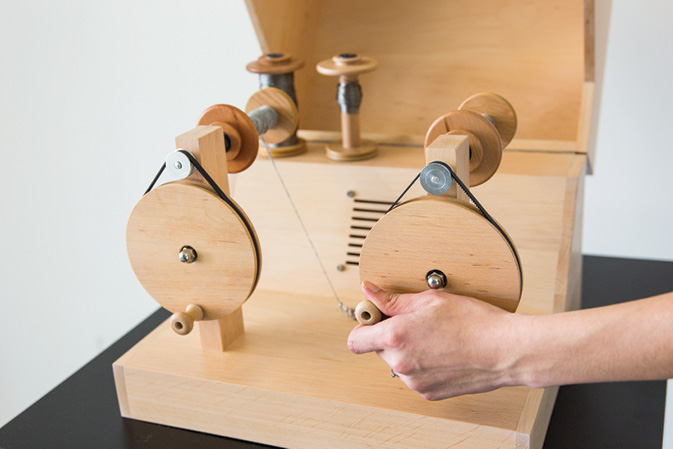
Fig. 11.1 Yarn Recorder (2018); So Kanno, Ebru Kurbak (photo by Elodie Grethen ©Stitching Worlds)
The second example is an ‘imaginary media,’ which was ‘sketched, modelled, and diagrammatized, but never really born.’4 Oberlin Smith, an American mechanical engineer and inventor who paid a visit to Thomas Edison’s laboratories in New Jersey in the 1880s, published a theoretical paper titled ‘Some Possible Forms of the Phonograph’ on 8 September 1888 in the journal The Electrical World. Published about eight years after his visit to Edison’s lab, Smith’s paper proposed a number of improvements to Edison’s phonograph and the intriguing, novel idea to record sound magnetically. Smith’s paper came before the Danish inventor Valdemar Poulsen actually patented the first magnetic recording device (the telegraphone) in 1898, and is therefore considered the first appearance of magnetic recording, albeit only in theory. Interestingly, unlike Poulsen’s telegraphone, which recorded sound on steel wire, Oberlin Smith proposed using cotton thread that ‘would be spun (or otherwise mixed) hard steel dust, or short clippings of very fine steel wire, hardened’ (Smith 1888).
The very first magnetic recording medium, then, was really imagined to be thread, a fact unknown to us at the time of the conception of the Yarn Recorder. Unlike the Yarn Recorder, Oberlin Smith’s device was never actually built. Smith filed a caveat that shows he was engaged in making experiments and wanted to secure the rights of a potential future patent (Engel 1990: 16). In his published theoretical paper, too, he refers to having made some experiments. Unfortunately, the extent of Smith’s experiments and what results he achieved are unknown, as most of Smith’s documents and experimenting equipment were destroyed in a fire at his factory building in 1903 (Engel 1990: VII). It is therefore difficult to know what the object would have looked like had it been built.
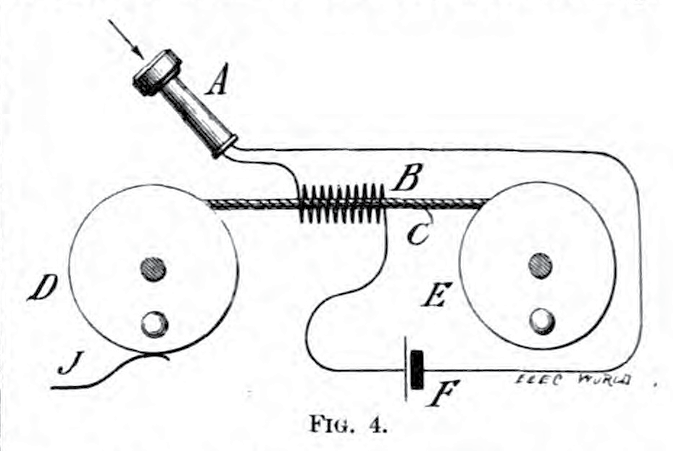
Fig. 11.2 Oberlin Smith’s initial illustration in Smith 1888: 116
In one of the schematic drawings provided in the original paper, Oberlin Smith notably illustrates the recording medium (cord C) as spun thread by hatching it diagonally (figure 11.2). Unfortunately, all the diagrams in the paper are shown from above; however, some written comments of the inventor shed light on the spool size and thickness of yarn he had in mind. ‘The cotton thread above mentioned would seem to be preferable to anything else on account of its cheapness, lightness and flexibility,’ states Smith, who adds that this cord must be rather thin, since if it ‘approached a clothes line rather than a piece of sewing silk in its general proportions it would be utterly useless as a practical recording medium’ (Smith 1888). In another statement, Smith hints at a concrete type of thread while simultaneously acknowledging it as women’s material. ‘The Lord’s Prayer could be written upon a few feet of thread or string,’ states Oberlin Smith, ‘while a young lady receiving a small spool of cotton from her lover would think herself abominably neglected if it was not “warranted 200 yards long”’ (Smith 1888). The mysterious pun here, which Smith placed in quotes, was transcribed in an article by Jentery Sayers. The inventor apparently refers to the crochet and darning cotton threads of the Clark Thread Company and others (Sayers 2013: chap. 1). Each of Clark’s ‘Our New Thread’ (‘O.N.T’) spools held exactly two hundred yards of fine cotton thread. However, since the spools were small and tightly wound, the length of wrapped thread was impossible to determine by the buyer. Thus, the company placed the tag line ‘Warranted 200 yards long’ on printed labels placed on the cotton spools to assure the buyers. Not in the original publication, but in a caveat Oberlin Smith submitted to the Commissioner of Patents on 4 October 1878, three figures in perspective view were provided. The spools in the illustrations clearly resemble the typical late nineteenth-century wooden sewing thread spools of Clark Threads (figure 11.3).
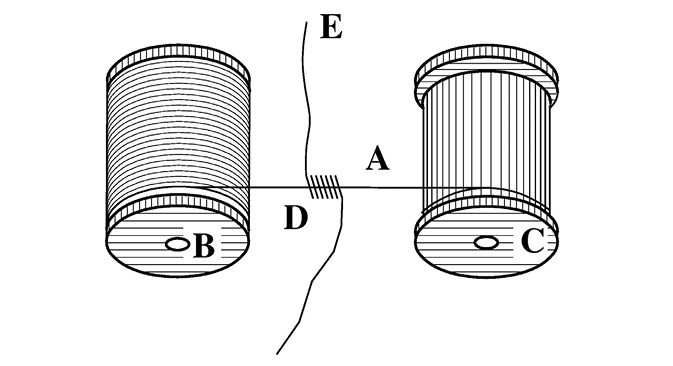
Fig. 11.3 CAD reproduction of drawing by Oberlin Smith first published in The Caveat of 4 October 1878 (reproduction by Friedrich Karl Engel (Engel 1990:14))
The Yarn Recorder and Oberlin Smith’s sewing thread recorder are two different manifestations of the very same idea, although they were conceived in different times and circumstances and with very different intentions. Both devices simply replace the wire in Poulsen’s telegraphone with yarns and threads with electrical properties. Despite the perceived peculiarity, from today’s perspective, of the idea of yarn as a recording medium, the devices do not seem entirely out of place. They are capable of creating a special sense of dissonance, I would argue, similar to what Tharp and Tharp refer to as ‘productive dissonance’ in design theory, or what Darko Suvin calls ‘cognitive estrangement’ in science fiction criticism (Tharp and Tharp 2018: 195; Suvin 2016: 8–9). The devices cannot be simply dismissed as nonsensical or as purely speculative fantasy, but they rather oscillate between the peculiar and the familiar continuously. The source of the peculiarity can clearly be located in the perceived rupture between the gendered worlds of textiles and electronics. The familiarity, I would propose, lies in the archetypical nature of the string and hence the eternally existing link between the two fields.
The string as archetype
‘The yarn is neither metaphorical nor literal, but quite simply material,’ states Sadie Plant in Zeros and Ones, ‘a gathering of threads which twist and turn through the history of computing technology, the sciences and arts. In and out of the punched holes of automated looms, up and down through the ages of spinning and weaving, back and forth through the fabrication of fabrics, shuttles and looms, cotton and silk, canvas and paper, brushes and pens, typewriters, carriages, telephone wires, synthetic fibers, electrical filaments, silicon strands, fiber-optic cables, pixeled screens, telecom lines, the World Wide Web, the net, and matrices to come’ (Sadie Plant 1998: 12). In his comparative anthropology of the line, Tim Ingold suggests ‘threads’ as one of the two major categories of the line along with ‘traces.’ (Ingold 2007: 41) ‘[A] ball of wool, a skein of yarn, a necklace, a cat’s cradle, a hammock, a fishing-net, a ship’s rigging, a washing line, a plumb-line, an electrical circuit, telephone lines, violin strings, the barbed-wire fence, the tightrope, the suspension bridge,’ according to Ingold, are all examples of threads (Ingold 2007: 41). The anthropologist refers to the writings of architect Gottfried Semper, who also famously argued that first came the thread, and then everything else in human manufacturing history was derived from the most ancient human art of threading, twisting and knotting of fibres (Ingold 2007: 41; Semper 2011: 254). Invented more than 20,000 years ago, string is the first linear element formed by humans known in history, and therefore the archetype of electrical wire and all other imaginable derivations.
Poulsen’s wire recorder, Smith’s thread recorder, and our Yarn Recorder were all materially conceivable because conductive metallic threads and yarns, wires and cables, all ‘afford’ similar things to humans in the Gibsonian sense. In his theory of affordances in The Ecological Approach to Visual Perception, Gibson defines affordances as what an environment offers to the animal (Gibson 1986: 127). Affordances are not properties that can be objectively identified through physics, but are qualities that are relative to the animal. And different objects in the environment have different affordances for the same animal. In his study, the psychologist establishes ‘fiber’ as a separate category of objects that is ‘an elongated object of small diameter, such as wire or thread’ (Gibson 1986: 35). Just like sheets, sticks, containers that afford distinct types of manipulation, ‘an elongated elastic object, such as fiber, thread, thong, or rope, affords knotting, binding, lashing, knitting, and weaving’ (Gibson 1986: 133). Through these kinds of behaviour, manipulation leads to manufacture, which eventually transforms the environment to offer new affordances. It is through the affordances of string that were first explored in textile making, I would argue, that many early inventions in electrical and electronics engineering could be conceived.
String affords binding two points in space with each other, for instance. A poem written by the American poet John Greenleaf Whittier, for the occasion of the development of the transatlantic telegraph cable in 1850s, exemplifies the perceived interchangeability of thread and wire as binders in early electrical investigations. Whittier’s poem was published in the Atlantic Monthly in October 1858 and reads: ‘The atlantic cord as thread. / What saith the herald of the Lord? / “The world’s long strife is done! / Close wedded by that mystic cord, / Her continents are one”’ (Byrn 1900: 399). Written about two months after the first electric communications between the two continents had occurred, the poem celebrated the interlocking of the two continents by means of a cord both physical and electrical. The binding string, moreover, allows transmission along its length. ‘[W]hether encountered as a woven thread or as a written trace,’ states Tim Ingold, ‘the line is still perceived as one of movement and growth’ (Ingold 2007: 2). The process of spinning already suggests growth along the yarn. Spun yarn, furthermore, suggests movement along its length through its capacity to transmit liquid matter and fire in that very direction. From cotton wicks of candles and oil lamps to fuses in pyrotechnics, the transmitting property of the string had been utilised in many inventions long before electrical technology came along. ‘The string phone,’ which is an invention attributed to the English natural philosopher Robert Hooke, mechanically transmitted spoken words over a distance long before the invention of the telephone.
Human experience with string over thousands of years inspired the very discovery of the electrical conductivity of metal wire for establishing electrical connections between two points in space. The astronomer Stephen Gray discovered electrical conductivity in experiments he carried out in 1729, in which he transferred electricity from a glass tube to an ivory ball over a distance. Gray suspended an ivory ball from his balcony by means of a long line of ‘pack thread’ – a coarse hempen fibre – that measured 26 feet from end to end. He attached a glass tube to the top end of the thread, and observed that the ivory ball on the other end of the thread strongly attracted pieces of leaf brass when he rubbed on the glass tube. In trying to reconstruct the experiment horizontally, Gray hung the pack-thread horizontally across his flat with the help of a number of silk threads that attached the thread to the ceiling at intervals. The electrical transfer between the glass tube and the ivory ball functioned horizontally as well; however, the silk threads were not strong enough and therefore broke mid-experiment. To achieve a mechanically stronger system, he tried to hang the pack-thread with brass wire instead of silk, and realised that electrical transmission did not happen in this version of the experiment. Following these observations Gray concluded that materials can be classified as ‘electrics’ and ‘non-electrics.’ The pack-thread – especially when it was wet – could transmit electricity; however, silk did not carry electrical charge and therefore could not conduct it from the pack thread to the ceiling (Corrigan 1924: 106–07). It took another five years before Stephen Gray finally discovered metallic wire conductors in 1734.
String does not only afford electrical conduction, but also resists the flow of electricity. The material of the string determines its electrical conductivity and resistance. When Stephen Gray experimented with pack-thread, the capacity of the ivory ball was so small that it must have not mattered for the inventor that the resistance of the thread was probably as high as 10 mega ohms per foot. It was only after Gray discovered metallic conductors that textile threads were classified as poor conductors (Hearle 1952: 2).
The electrical resistance of threads became a subject of investigation in Edison and Swan’s experiments with light bulbs. Their first electric light bulbs were made of carbonised, off-the-shelf, ordinary cotton sewing threads. During Thomas Edison’s early experiments, the person who was responsible for mounting the small filaments was apparently the British mechanic Charles Batchelor, who was Mr Edison’s principal assistant at the time and had moved to America to set up the thread-weaving machinery for the infamous Clark thread factory (Dyer 1910: chap. 12). Edison reportedly recorded a wide range of materials that he carbonised and tried with Batchelor’s assistance, including all kinds of threads, fish-line, threads rubbed with tarred lampblack, fine threads plaited together in strands, cotton soaked in boiling tar, lamp-wick and twine, as well as various kinds of paper, wood shavings, vulcanised fibre and around six thousand different species of vegetable growths (Dyer 1910: chap. 11). When Edison and Swan finally came up with the idea of nitrocellulose, Swan reportedly prepared some particularly fine thread for his wife, crocheted into lace doilies, to be exhibited in 1885 as ‘artificial silk’ (Atherton 1984: 132). Despite Edison’s records of the fibre types that he employed, and the occasional appearance of threads in electrical experiments, studying the electrical properties of textile fibres was not of much interest to textiles researchers up until the 1950s, when J. W. S. Hearle carried out his doctoral research on the subject (Hearle and Morton 2008: 643).
The length of the string determines the distance over which electricity can be conducted and the total amount of resistance that the string will present to the flow. The string can be extended in length through knotting, and splicing. Prehistoric evidence shows the importance of the technique of splicing already in ancient Egypt. North of the Mediterranean, yarns were made through draft spinning, which produces a cohesive and continuous yarn by carefully feeding the thread with fibres, little by little. Ancient Egyptians, however, did not employ draft spinning. Instead, they pre-prepared 50–100 centimetres-long flax fibre bundles, overlapped two bundles at the ends by a few centimetres, and spliced the ends together by twisting the overlapping part to hold together temporarily. They then used the spindle to combine the extended strand of yarn with another strand by adding a little twist in order to create long workable threads (Barber 1991: 47). Variations of the ancient technique of splicing were used in extending solid and stranded electrical wire soon after they became a standard for electrical applications. By the late nineteenth century, the method of splicing for connecting two threads mechanically started to be used extensively in extending telegraphy lines. Techniques such as the Western Union splice and the rat-tail joint, for instance, are typical adaptations of the prehistoric technique of connecting two cables together not only mechanically but also electrically (Sharp 1916: 13–14). The ways in which multiple wires were bundled and organised also eventually resembled applications in textiles, especially embroidery techniques such as couching share principles with the techniques of ‘cable lacing,’ which were largely used to bundle cables together before cable ties, or to guide groups of cables on surfaces.
The possibility of wrapping one string on another has long been explored in textiles, particularly in manufacturing metal threads to be then used in weaving or embroidery. Passing, for example, is a metal thread that is widely used in embroidery (Textile Research Centre Leiden 2018). It is made by winding a thin strip of metal around a cotton or silk thread core. Crinkle cordonnet, similarly, is made by wrapping a cotton core with a very fine metal wire to achieve a wavy structure. Flat worm is made by loosely wrapping a strip of metal around a cotton core and then slightly flattening the thread. The opposite form of such threads, in which metal cores are wrapped with cotton or silk, can be found in early electrical applications. In early nineteenth-century electrical experiments, mainly on telegraphy, this technique was used to insulate wire. In fact, it was milliners who typically did this job; just like they did in preparing the bonnet wire in making hats, they wrapped wire with cotton or silk threads in requested lengths to be used in electrical applications (Blake-Coleman 1992: 141–42). Examples of this type of wire, with cotton-wound insulation at different gauges, survive from Faraday’s experiments. These experiments with ‘silken wire’ led him to many groundbreaking inventions. For example, by continuing to wind the silk wire around various objects, he discovered the electromagnet. ‘When a little helix containing twenty-two feet of silken wire wound on a quill was put into the circuit, and an annealed steel needle placed in the helix,’ Faraday wrote in his notes, ‘the needle became a magnet’ (Faraday 1844: 6).
By winding the string, one can form coils or store the string on spools. Wrapping the string around an object for storing the string in a compact and stretched form is an idea that goes back to the very invention of spinning. A spindle (or stone or twig) that is rotated around its own axis helps short fibres form continuous yarn by twisting, but at the same time functions as the holder for the already spun yarn (Barber 1991). Invented before the wheel, the spindle constitutes the first prototype not only for spools and reels but also wheels, gears, pulleys, all sorts of winding systems and all rotary technologies (Hochberg 1980). In early electrical experimentations, the principle of the spindle led to the invention of electronic components such as wire-wound resistors and coils, which eventually led to the invention of motors, transformers, generators, loudspeakers and microphones, and much more.
During the industrialisation of textile production, inventors in the textiles industry sought better ways of winding yarns so that they could be unwound without trouble. This brought about the principles of winding threads traversely across bobbins, winding multiple threads together in parallel for preparing warp threads for weaving, as well as winding thread in spaced spirals to form balls (English 1958: 171–83). The electronics industry appropriated similar principles and brought about new methods not only in the plain spooling of wire but also in alternative methods of coil winding such as basket winding, bifilar coil winding, and the winding of spider web and honeycomb coils to mitigate problems such as energy loss, proximity effect and parasitic capacitance in coils. As in the aforementioned experiments by Valdemar Poulsen and Oberlin Smith, the principle of the spool as storage for string appeared in a new form for storing data, with the invention of magnetic recording at the end of the nineteenth century. Another industry that developed in parallel, cinematic motion pictures, appropriated the same principle to store film on reels in various formats.
‘Threads have a way of turning into traces, and vice versa,’ suggests Tim Ingold. ‘Moreover, whenever threads turn into traces, surfaces are formed, and whenever traces turn into threads, they are dissolved’ (Ingold 2007: 2). One of the greatest affordances of the string has been weaving. This ancient technique can construct surfaces from threads, on which threads transform into traces. The 2008 documentary video Moon Machines describes the much-referenced occasion of the direct use of weaving in electrical engineering. The documentary exposes the creation process of the Apollo Guidance Computer, developed by the MIT Instrumentation Lab for the Apollo program for lunar missions in the 1960s. In order to make a reliable memory for the rockets, the computer scientists had to hire retired factory weavers to fabricate them, by literally weaving the structure of core memory and threading software into core rope memory. Commenting on this, Dick Battin, Director of the MIT at the time, says, ‘We called it the LOL method, the little old lady method,’ before swiftly adding ‘Not very nice. Today you couldn’t say those [words].’5 The way the story is told in the documentary conveys a view that has been prevalent until the turn of this century: MIT labs are not perceived as typical settings for women’s handcrafts.
However, despite the perceived oddness of women’s involvement in the process shown in the documentary, weavers were the ideal candidates to make those devices, simply because both the core rope and the magnetic core memory were textile memories, even if not woven in the fullest sense. The manufacturing processes resembled weaving, while simultaneously also utilising the string’s affordance of beading. Both types of memory utilised two distinct elements: wires and magnetic cores. In the read-only rope memory, the program was hard-coded through the very process of threading a wire through the centre hole of the core (or not). Threaded through the hole, the core represented a one, and an empty core represented a zero. Magnetic core memory, on the other hand, showed further resemblances to woven fabric, although the wefts were merely laid on the warps rather than alternating over and under. The hardware was made of magnetic cores held together in a grid structure of multiple wires threaded through the holes in the centers of the cores. The cores then could be magnetised either in a clockwise or counter-clockwise direction by electric signals sent through particular wires to represent the zeros and ones. Stephen Monteiro, in The Fabric of Interface, points out the similarities between magnetic core memory and the popular women’s weaving handloom kits of the time (Monteiro 2017: 43–47). There is a great resemblance between the two, except the threads in the home handloom are replaced with conductive wires in the core memory, and the decorative beads with magnetic cores. In other words, knowingly or unknowingly, it was upon the principles of women’s work that the devices of the MIT researchers were conceived in the very beginning.
‘All weaving is the interlacing of two distinct groups of threads at right angles,’ explains Anni Albers, ‘Wherever a fabric is formed in a different manner, we are not dealing with a weaving’ (Albers 2017: 23). Twining can be considered a type of weaving in which a double weft thread crosses the stretched warp threads at right angles, and locks one warp thread between the twists of its two strands (Albers 2017: 36). In coiling, which is a technique also often seen in basketry, the fabric is formed by wrapping a single thread continuously around a core. If the threads are intersecting ‘diagonally in relation to the edge of the fabric, or radially from the center,’ we are looking at braiding. If only one thread is used to construct the whole fabric, the technique may be crocheting or knitting. If threads are intertwining or looping around each other, the fabric might have been constructed by lace making, knotting, looping or netting.
The potentials of constructing dense surfaces or coarse meshes out of string were not fully explored in historical practices of electrical engineering, except for instance the occasional use of woven or knitted wire meshes in the construction of Faraday cages, or the braiding of thin copper wire to achieve the production of flexible coaxial cable. The construction of electronically functioning components and devices through techniques such as weaving, knitting, crocheting, braiding and twining, among others, has only recently begun to be explored in investigations in the space between textiles and electronics from artistic, DIY, educational and engineering perspectives.6
Unrealised pasts
If the conceptions of and with the electrical wire can be traced back to prehistoric string, it can be argued that the fields of textiles and electronics could have been intrinsically fused from the very beginning. Affordances that are offered by objects are always there, according to Gibson, regardless of whether the observer can perceive them or not:
The affordance of something does not change as the need of the observer changes. The observer may or may not perceive or attend to the affordance, according to his needs, but the affordance, being invariant, is always there to be perceived. An affordance is not bestowed upon an object by a need of an observer and his act of perceiving it. The object offers what it does because it is what it is (Gibson 1986: 138–39).
Metal threads had already been in use for over 2000 years by the time electricity became a field of research in the nineteenth century. Thus, some of today’s electronic-textile experiments could technically have been done back then.
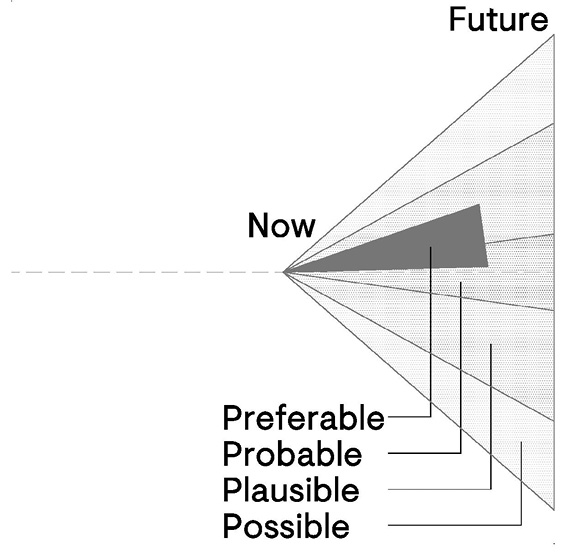
Fig. 11.4 The possibilities cone based on the illustration ‘PPPP’ in Dunne and Raby 2014: 5
In other words, textiles and electronics practices had been regarded as incompatible with each other not due to their materialities, but rather because of social processes. The two practices were carried out strictly by different people at different places, and interactions between them were greatly hindered by gender stereotyping for a very long time. As shown through historical examples, there have been some crossovers due to the archetypical nature of string. Yet the potential of string was not fully explored, not only because women have been mostly excluded from the electronics scene, but also as the educated, white, male electricians have abstained from learning textile handcrafts. Through this lens, the increased interaction between fields of textiles and electronics today can be considered a natural result of the lifting of those social segregating forces. Thus, some of the current inventions, despite how ‘futuristic’ they might seem today, are in fact manifestations of ‘unrealised pasts.’
At this point, revisiting the examples of the Yarn Recorder and Oberlin Smith’s thread recorder can help develop this argument. In an article within the project book of ‘Stitching Worlds’, I have discussed the Yarn Recorder and inventions alike as ‘lost possibilities’ (Kurbak 2018: 117), and referred to the ‘possibilities cone,’ which is a model that is widely referenced in future forecasting and Dunne and Raby’s theory of speculative design (Dunne and Raby 2014: 5) (figure 11.4).
The cone represents the idea of multiple ‘futures’ as opposed to ‘a future.’ The model is of course a limited one, unable to account for the multiplicity of situated perspectives because it relies on a singular vantage point. Yet it can be a useful tool if considered as a representation of a dominant, widely circulated view from a position of power in a given time and context. Consisting of four nested cones of possible, plausible, probable and preferable futures, the model renders design and invention as political acts due to the role they play by influencing which of these endless possibilities will become ‘the future.’ I have proposed drawing a second cone, an exact mirror reflection of the possibilities cone, towards the past (figure 11.5). This ‘lost possibilities’ cone represents the possibility for one to ‘see things in history that could have happened, but did not, not always because they were not preferable, but because they were not imaginable’ (Kurbak 2018: 117). The purpose of the cone of lost possibilities, by highlighting what had been ‘unimaginable,’ is to reveal the limitedness of human imagination. Affordances of things that have always been there but had not been seen by observers of the past, can be seen an observer of today in the light of their current experiences, knowledge, desires and capabilities.
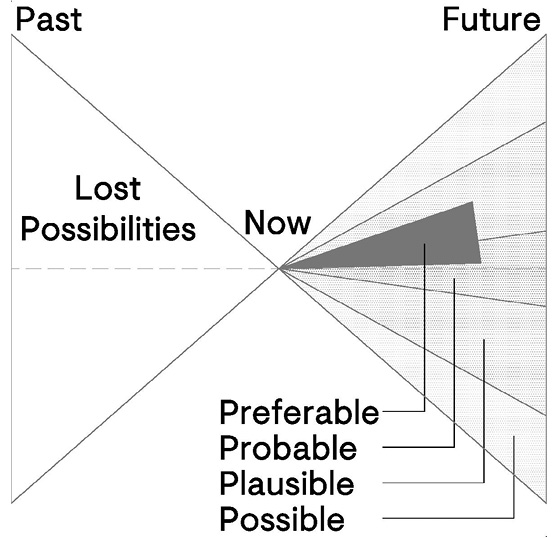
Fig. 11.5 The lost possibilities cone (illustration by Ebru Kurbak)
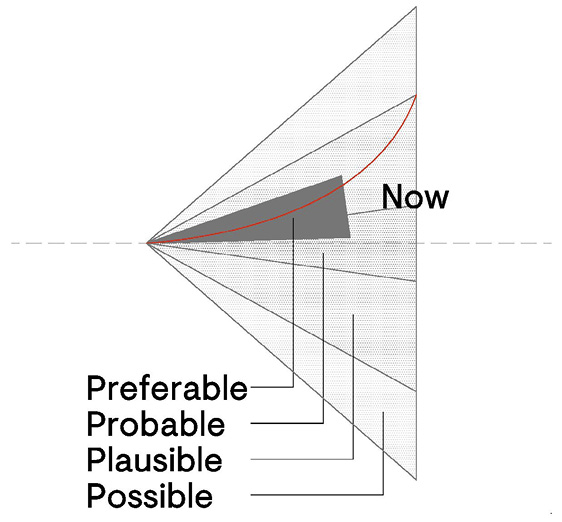
Fig. 11.6 Drifting futures (illustration by Ebru Kurbak)
Thinking of Oberlin Smith’s invention in discussion with the Yarn Recorder opens an additional line of thought. The possibilities cone that was projected from where Oberlin Smith stood in the 1880s suggested an endless number of linear rays (paths to different futures) spreading from one point and filling up the conic volumes. As Jentery Sayers proposes, Smith’s ideation of recording audio on thread ‘demands faith in the medium – a faith that thread would store sounds naturally, authentically, and exactly as they existed prior to their mediation’ (Sayers 2013: chap. 1). The inventor obviously had the necessary faith in thread and saw a sound recorder that utilises thread as a ‘probable’ and even ‘preferable’ future technology for his audience. The Yarn Recorder however, 130 years later, was designed precisely because we, as its designers, anticipated that the technology would be ‘barely plausible’ to a contemporary Western audience due to the perceived rupture between the two worlds of textiles and electronics.
Technologies that once seemed probable from a certain viewpoint can become implausible, or vice versa, due to social, cultural and economic influences. Some paths are in fact curves, or even parabolas, instead of straight rays, which slip through the different cones of possibilities over time, back and forth, in different directions (figure 11.6). Looking into the past through today’s lens, one can see those ups and downs, inclusions and exclusions of people, things, knowledge and practices throughout history. But also today, with intentional and sustained efforts, the slipping between cones can be influenced; from positions at their margins, possibilities can be moved into visibility, unsettling boundaries and hopefully gradually shifting dominant views.
Conclusion
Techniques of textile making can be considered the ‘high-tech’ of prehistory. During the Industrial Revolution the ‘technicity’ of textiles was once more highly celebrated for a period. However, for most of the last few centuries in the Western world, textile crafting techniques, categorised as women’s work, have been carried out and cultured in the confinement of the home, perhaps resulting in a loss of the imagination of ‘technical’ possibilities. By puncturing through the histories of what happened in textiles and electronics by means of string – and this chapter has barely scratched the surface of these possibilities – I have tried to inspire an impression of what could not happen. Knowledges that were once placed at the centre in the imagination of futures slowly drifted to the far edges of the possibilities cone over a long period of time. As an artist, I believe that working with such knowledge and abruptly pulling it from that far edge to the very centre in an artwork is only one way of revealing the politics involved. Eventually the pulls will influence the drifts, however small.
Acknowledgement
This research was funded in whole or in part by the Austrian Science Fund (FWF) [10.55776/V795].
Endnotes
1 Parker 2010: 4–5; see also Parker and Pollock 2013 for an expanded discussion on the role of the feminine stereotype in art historiography.
2 Quoted by Oldenziel 1999: 49.
3 The Yarn Recorder was developed as a continuation of the ‘Magnetic Recording on Fibers’ workshop (2014) carried out by So Kanno, Ebru Kurbak and Irene Posch with the engineering assistance of Matthias Mold within the scope of the ‘Stitching Worlds’ project.
4 Siegfried Zielinski, rephrased in Parikka 2012: 50.
5 First aired on TV in June 2008, Moon Machines is a documentary series directed by Christopher Riley, Duncan Copp and Nick Davidson. See Moon Machines 2008: part 3: The Navigation Computer, 22:43.
6 See for instance Kurbak 2018 (Stitching Worlds).
References
Albers, A., On Weaving (Princeton, NJ: Princeton University Press, 2017).
Atherton, W. A., From Compass to Computer: A History of Electrical and Electronics Engineering (San Francisco, CA: San Francisco Press, 1984).
Balibar, É., Politics and the Other Scene (London: Verso, 2002).
Barber, E. W., Women’s Work – The First 20,000 Years: Women, Cloth, and Society in Early Times (New York: W. W. Norton, 1995).
Barber, E. J. W., Prehistoric Textiles: The Development of Cloth in the Neolithic and Bronze Ages, with Special Reference to the Aegean (Princeton: Princeton University Press, 1991).
Blake-Coleman, B. C., Copper Wire and Electrical Conductors: The Shaping of a Technology (Chur: Harwood Academic Publishers, 1992).
Byrn, E. W., The Progress of Invention in the Nineteenth Century (New York: MUNN & CO Publishers, 1900) Project Gutenberg EBook.
Buechley, L., J. Jacobs, and B. Mako Hill, ‘LilyPad in the Wild: Technology DIY, E-Textiles, and Gender’, in L. Buechley and others, eds, Textile Messages: Dispatches from the World of E-Textiles and Education (New York: Peter Lang, 2013), pp. 146–57.
Calvino, I., Invisible Cities (London: Vintage Books, 1997).
Corrigan, F. J., ‘Stephen Gray (1696–1736): An Early Electrical Experimenter’, Science Progress in the Twentieth Century (1919–1933), 19.73 (1924): 102–14. https://www.jstor.org/stable/43430616.
Dunne, A., and F. Raby, Speculative Everything: Design, Fiction, and Social Dreaming (Cambridge, MA: MIT Press, 2014).
Dyer, F. L., and T. C. Martin, Edison: His Life and Inventions (New York: Harper & Brothers, 1910). Project Gutenberg Ebook. https://www.gutenberg.org/files/820/820-h/820-h.htm.
Engel, F. K., Oberlin Smith and the Invention of Magnetic Sound Recording: An Appreciation on the 150th Anniversary of the Inventor’s Birth (Bensheim: Oberlin Smith Society, 1990).
English, W., ‘A History of Winding’, Mather Lecture 1958, 168–94. Taylor & Francis Online. https://doi.org/10.1080/19447015808688362.
Faraday, M., Experimental Researches in Electricity, VOL II (London: Richard and John Taylor Printers and Publishers to the University of London, 1844).
Gibson, J. J., The Ecological Approach to Visual Perception (Hillside, NJ: Lawrance Erlbaum Associates Publishers, 1986).
Haff, P. K., ‘Technosphere and Technoecology’, Interview by E. Hörl, Technosphere Magazine, 15 November 2016. https://technosphere-magazine.hkw.de/p/Technosphere-and-Technoecology-qzjFDWgzxX2RDEDg9SN32j.
Hearle, J. W. S., ‘The Electrical Resistance of Textile Materials’, PhD Thesis, University of Manchester, 1952. ProQuest (27529578).
Hearle, J. W. S., and W. E. Morton, Physical Properties of Textile Fibres (Cambridge, UK: Woodhead Publishing, 2008).
Hochberg, B., Handspinner’s Handbook (Santa Cruz, CA: B. & B. Hochberg, 1980).
Holland, R. S., Historic Inventions (Philadelphia, PA: George W. Jacobs and Company, 1911). Kindle.
Ingold, T., Lines: A Brief History (Abingdon: Routledge, 2007).
Kanno, S., and E. Kurbak, ‘Yarn Recorder’, in E. Kurbak, ed., Stitching Worlds: Exploring Textiles and Electronics (Berlin: Revolver Publishing, 2018), pp. 122–25.
Kurbak, E., ‘Fiberpunk: Inventing Feminine Pasts’, in E. Kurbak, ed., Stitching Worlds: Exploring Textiles and Electronics (Berlin: Revolver Publishing, 2018), pp.114–21.
Kurbak, E., ed., Stitching Worlds: Exploring Textiles and Electronics (Berlin: Revolver Publishing, 2018).
Küchler, S., ‘The String in Art and Science: Rediscovering the Material Mind’, Textile: The Journal of Cloth and Culture, 5.2 (2007): 124–39. doi: 10.2752/175183507X219416.
Marvin, C., When Old Technologies Were New: Thinking About Electric Communication in the Late Nineteenth Century (New York: Oxford University Press, 1988).
Monteiro, S., The Fabric of Interface: Mobile Media, Design, and Gender (Cambridge, MA: MIT Press, 2017).
Moon Machines. Directed by Christopher Riley, Duncan Copp and Nick Davidson, 2008.
Parker, R., The Subversive Stitch: Embroidery and the Making of the Feminine (London: I. B. Tauris, 2010).
Parker, R., and Pollock, G., Old Mistresses: Women, Art and Ideology (London: I. B. Tauris, 2013).
Oldenziel, R., Making Technology Masculine: Men, Women, and Modern Machines in America, 1870–1945 (Amsterdam: Amsterdam University Press, 1999).
Parikka, J., What is Media Archaeology? (Cambridge, UK: Polity Press, 2012).
Plant, S., Zeros and Ones: Digital Women and the New Technoculture (London: Fourth Estate, 1998).
Sayers, J., ‘Making the Perfect Record: From Inscription to Impression in Early Magnetic Recording’, Scalar project, 2013. http://dx.doi.org/10.1215/00029831-2370230.
Sharp, J. M., Practical Electric Wiring (New York: D. Appleton and Company, 1916).
Smith, O., ‘Some Possible Forms of Phonograph’, Electrical World, 12.10 (1888): 116–17.
Semper, G., The Four Elements of Architecture and Other Writings (Cambridge, UK: Cambridge University Press, 2011).
Suvin, D., Metamorphoses of Science Fiction: On the Poetics and History of a Literary Genre (Vienna: Peter Lang Publishing, 2016).
Textile Research Centre Leiden, ‘Metal Threads’, https://trc-leiden.nl/trc-needles/materials/metal-threads [accessed 4 May 2018].
Tharp, B. M., and S. M. Tharp, Discursive Design: Critical, Speculative, and Alternative Things (Cambridge, MA: MIT Press, 2018).